
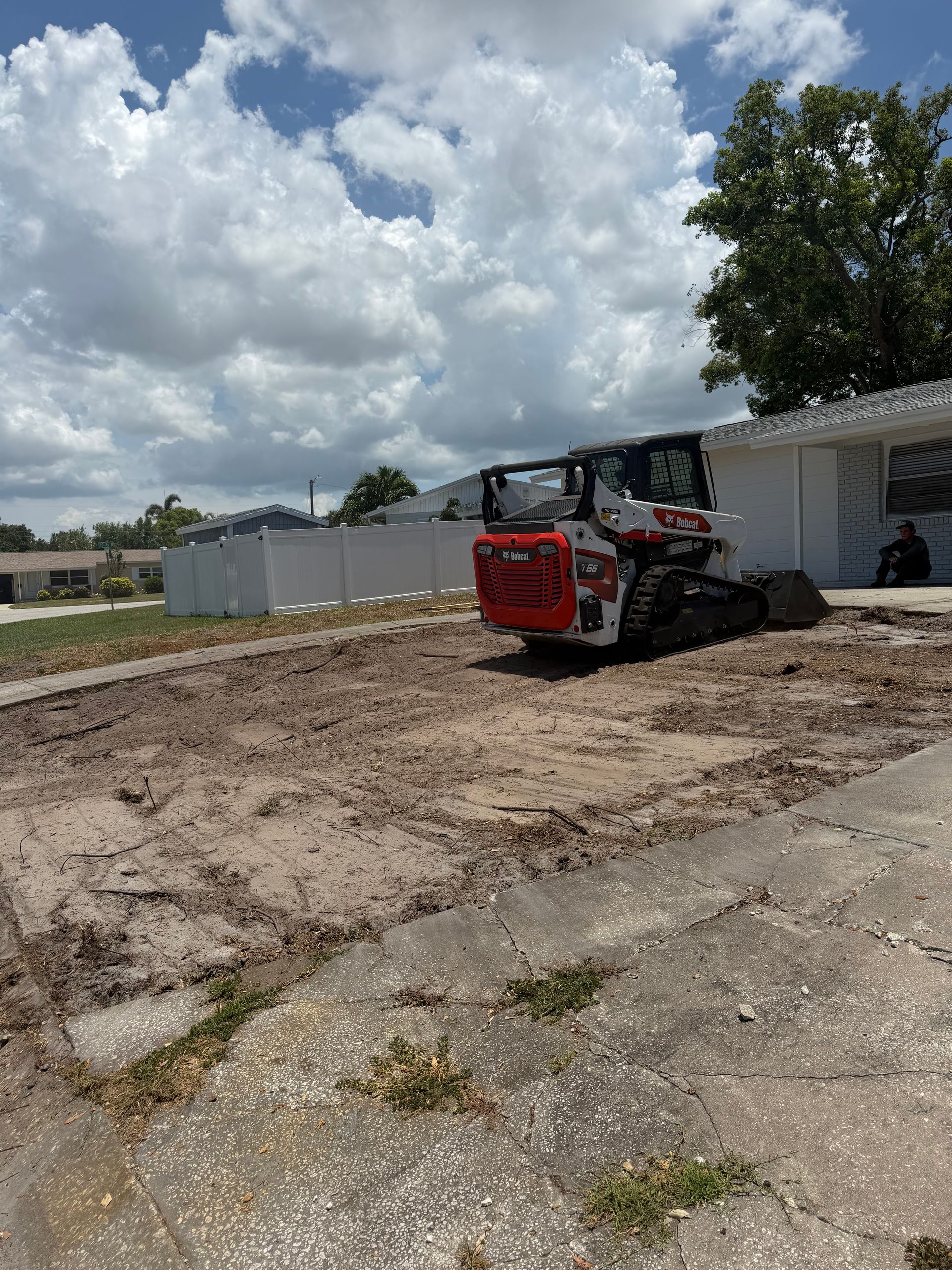
Stable Ground Ready for Project Work
Site Preparation in Palm Harbor for properties requiring organized, level working surfaces before hardscaping, landscaping, or construction begins
Raw or cleared ground rarely provides the stable, level surface required for quality installation work. Site preparation from STF Site Management LLC bridges the gap between existing property conditions and the improvements planned next, addressing grade irregularities, drainage issues, and loose or unstable ground that compromise finished work. In Palm Harbor, property owners schedule this service when hardscaping, landscaping, or building projects require predictable, compacted surfaces that prevent settling, water accumulation, or structural failure after installation completes.
The work includes clearing remaining debris, excavating to required depth, adjusting grade to direct water away from structures, and compacting subgrade to create firm working ground. Site preparation also involves identifying and addressing soft spots, root voids, or areas where sandy Florida soils need reinforcement before supporting pavers, concrete, or structural loads. Proper preparation prevents callbacks, material failure, and costly corrections that result from building on inadequate ground.
Request a project-planning consultation to evaluate your site's current condition and preparation requirements.
Why Early-Stage Preparation Supports Later Work
Site preparation establishes the foundation for every improvement that follows. Ground is excavated to design depth, removing unstable material and exposing firm subgrade that won't compress unevenly under load. Grading creates predictable drainage paths, preventing water from pooling under hardscapes or washing out landscape features during heavy rain. Compaction eliminates voids and air pockets that cause settling, cracking, or shifting after pavers, concrete, or structures are installed. STF Site Management LLC approaches this stage as part of the Start to Finish process, where quality early work reduces problems throughout the project.
Once preparation is complete, you'll notice level, firm surfaces where previously uneven or soft ground created obstacles. Equipment can move efficiently without getting stuck or creating ruts, materials can be placed on stable ground without immediate settling, and drainage flows predictably toward designed outlets rather than pooling randomly. The site looks organized and intentional, with clear working zones and visible progress toward the finished project.
Site preparation eliminates surprises that delay later work. When subgrade is properly compacted and drainage is addressed early, hardscape installations proceed without discovering soft spots that require excavation, and landscaping doesn't encounter pooling water that wasn't visible before grading. This stage defines project success by ensuring the ground supports finished work rather than undermining it through settling, erosion, or poor drainage.
Questions Before Starting Your Project
Site preparation raises practical questions about scope, timing, and how this stage affects the overall project outcome.
What does site preparation include before hardscaping or landscaping begins?
Preparation involves clearing debris, excavating to required depth, adjusting grade for drainage, and compacting subgrade to prevent settling. The specific scope depends on existing conditions, soil type, and what will be installed, but all preparation focuses on creating stable, predictable working ground.
How does Florida soil affect site preparation requirements?
Sandy soils common in Palm Harbor drain quickly but may lack load-bearing capacity without compaction. Areas with clay layers or shallow water tables require different approaches, and identifying soil conditions during preparation prevents problems after installation when corrections become expensive.
When is site preparation completed relative to other project stages?
Preparation follows land clearing and precedes hardscaping, landscaping, and construction work. Scheduling preparation immediately before installation prevents weather, regrowth, or traffic from degrading prepared surfaces and requiring rework.
What causes settling or failure after installation if site preparation is inadequate?
Loose soil compresses under load, voids left by decomposed roots create depressions, and poorly graded surfaces allow water to undermine base materials. These issues appear months after installation, causing cracking, shifting, or structural problems that trace back to insufficient early-stage preparation.
How does proper grading during preparation prevent drainage problems later?
Grading directs water away from structures, hardscapes, and areas prone to erosion. Establishing correct slope during preparation ensures water moves predictably, preventing pooling that damages installations, creates maintenance problems, or requires expensive drainage corrections after other work is complete.
STF Site Management LLC views site preparation as essential to the Start to Finish approach, where organized, stable ground supports quality installations and long-term property performance. Arrange an evaluation to review your site's preparation needs before project work begins.