
Hardscapes Built to Last Through Seasons
Paver Installation in Palm Harbor for creating functional outdoor surfaces including patios, walkways, and defined entertainment areas
Patios crack when bases settle unevenly, walkways develop low spots where water pools, and pavers shift when edge restraints fail or sand washes out from beneath individual units. Proper installation addresses what happens below the visible surface—excavation to required depth, base material compacted in lifts, bedding sand screeded level, and edge containment that prevents lateral movement. STF Site Management LLC handles paver installation across Palm Harbor and surrounding areas, creating finished hardscape surfaces that support outdoor furniture, foot traffic, and seasonal weather exposure without developing the failures common to improperly prepared bases.
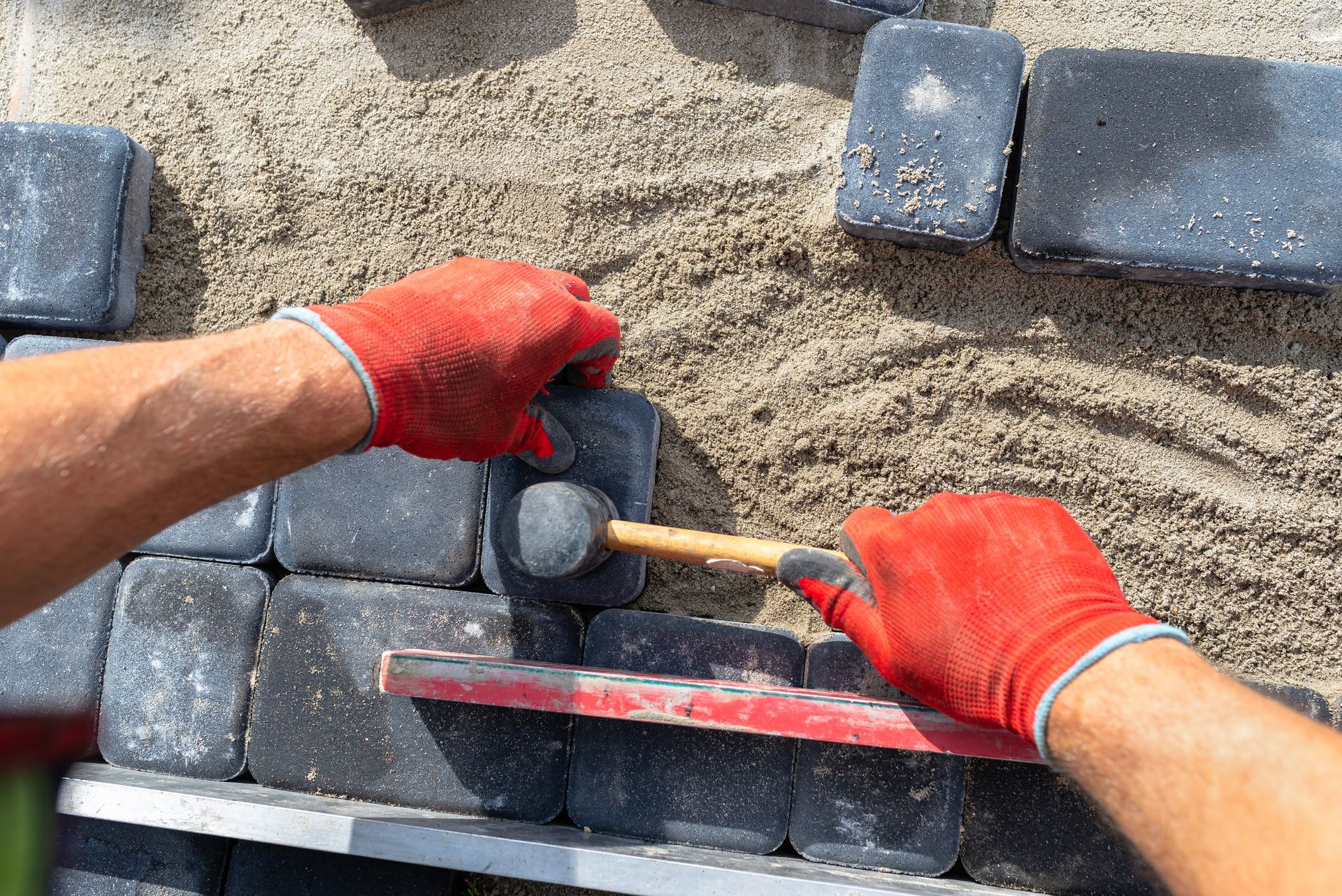
The installation process begins with site layout, excavation to accommodate base depth and final paver height, and preparation of compacted aggregate base that provides stable support and allows water to drain through rather than saturating underlying soil. Pavers are set in bedding sand, cut to fit edges and obstacles, and secured with border restraints before joints are filled with polymeric or standard sand.
Request a paver installation estimate to evaluate your site and discuss layout options.
What Separates Lasting Pavers from Failed Surfaces
Base preparation determines longevity—aggregate is placed in layers and compacted with plate compactors between lifts to prevent future settling that creates uneven surfaces or allows individual pavers to sink. Drainage considerations influence base depth and slope, ensuring water moves through the system rather than collecting beneath pavers where freeze-thaw cycles or saturation can destabilize the installation.
After installation, you walk across a firm, level surface that doesn't shift underfoot, water drains away rather than pooling in joints or low spots, and the patio or walkway maintains its elevation relative to adjacent structures and lawn areas. Pavers remain locked in place through seasonal temperature changes and rainfall events because edge restraints prevent outward creep and the compacted base resists settling.
Paver projects often require coordination with other site work—grading establishes proper slope before excavation begins, drainage solutions prevent water from undermining bases, and landscaping defines borders once hardscapes are complete. The installation creates the finished surface but does not include grading corrections beyond the immediate excavation area, removal of existing concrete or structures, or landscape planting adjacent to new pavers unless combined into a broader project scope.
What Property Owners Usually Ask
Understanding the installation process and how decisions affect performance helps property owners plan successful paver projects.
What determines how deep the excavation needs to be for paver installation?
Excavation depth accounts for paver thickness, one inch of bedding sand, and typically four to six inches of compacted aggregate base, with additional depth required in areas with poor soil drainage or where heavy vehicle traffic will cross the surface.
How does base preparation prevent pavers from settling unevenly over time?
Aggregate base is compacted in two- to three-inch lifts rather than placed all at once, allowing each layer to achieve maximum density before the next is added—this process creates a stable platform that resists compression and distributes weight evenly across the excavated area.
When should paver installation happen relative to other outdoor projects in Palm Harbor?
Pavers should be installed after grading establishes final elevations and drainage is addressed, but before landscape planting occurs near paver edges, so that installation equipment doesn't compact planting beds and borders can be finished cleanly against the hardscape.
What causes sand to wash out from between pavers after installation?
Standard joint sand washes out when pavers lack proper slope for drainage, when gaps are too wide due to spacing inconsistencies, or when heavy rain occurs before polymeric sand has cured—polymeric sand hardens after watering and resists washout better than loose material.
Can pavers be installed over existing concrete patios or walkways?
Pavers can overlay concrete if the existing surface is stable, properly sloped, and free of significant cracking, but this approach reduces excavation depth and may raise final paver height above surrounding grade, potentially affecting drainage or transitions to adjacent areas.
STF Site Management LLC approaches paver installation as the visible result of careful preparation that begins below ground. Schedule a consultation to discuss your hardscape goals and determine the base preparation, layout, and material selection that support long-term performance on your property.