
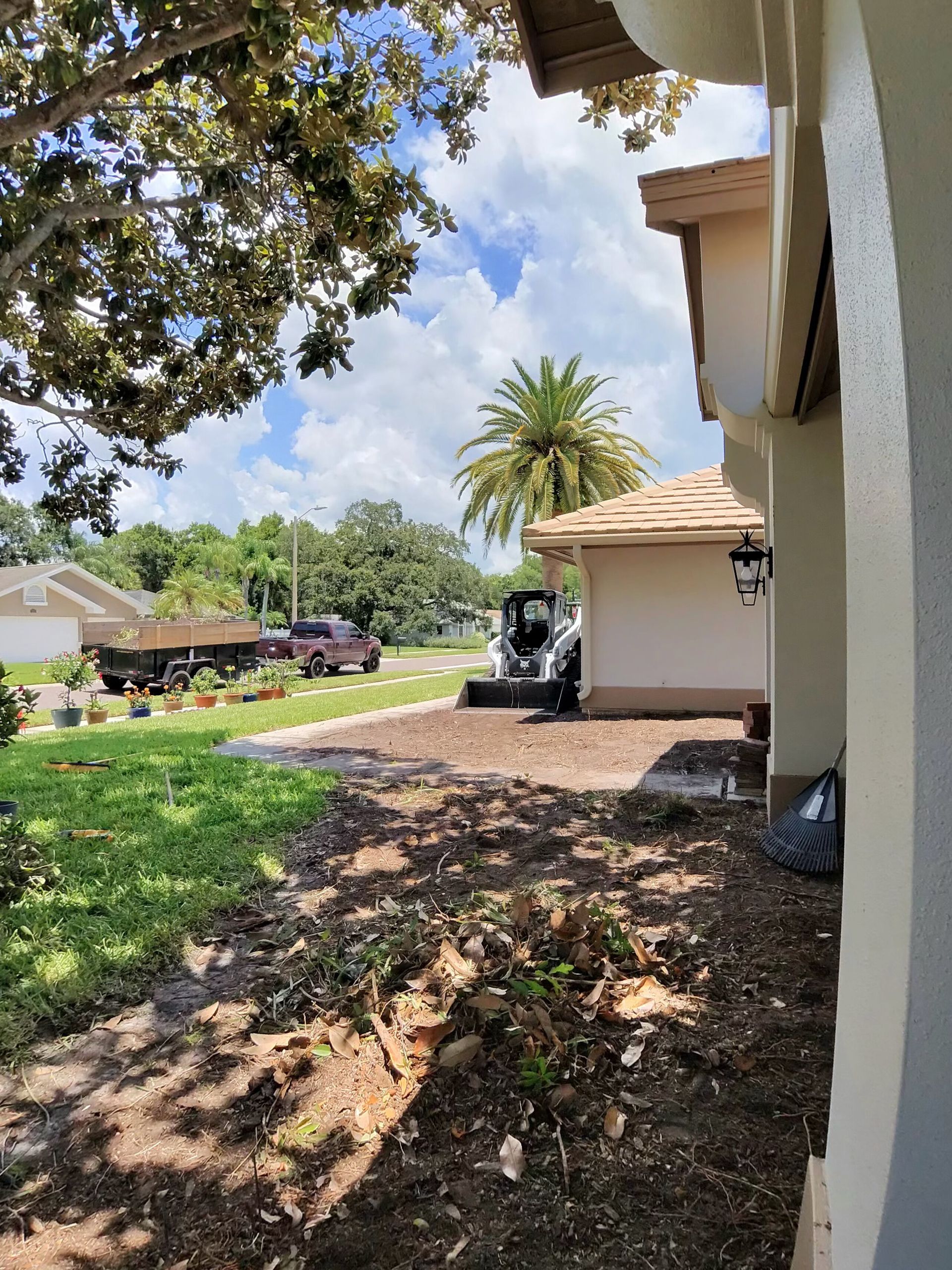
Ground Reshaped to Support What Follows
Grading and Land Leveling in Palm Harbor for uneven terrain, drainage concerns, and sites requiring stable foundations before hardscaping or construction
Uneven ground causes water to pool in low spots, creates unstable bases for pavers or retaining walls, and prevents proper drainage away from structures. STF Site Management LLC provides grading and land leveling across Palm Harbor and surrounding areas, reshaping outdoor surfaces to establish controlled slopes, eliminate depressions, and prepare sites for landscaping, hardscape installation, or additional construction phases. Evaluating existing grade, planned drainage direction, and how surrounding properties affect water flow determines where soil gets added, removed, or redistributed before any finishing work begins.
The grading process involves removing high spots, filling low areas, and sloping surfaces to direct water intentionally rather than allowing it to settle wherever gravity and compacted soil create pockets. Equipment selection depends on site access, soil type, and the extent of elevation change required to meet functional goals.
Arrange an on-site grading assessment to identify elevation issues and drainage flow requirements.
Why Proper Grading Prevents Future Problems
Grading decisions account for final surface elevation, the slope percentage needed to move water without causing erosion, and how new grade interacts with existing driveways, sidewalks, or adjacent properties. Soil is compacted in layers after placement to prevent settling that would undo slope adjustments and create new depressions over time.
After leveling, your property drains predictably, hardscape bases sit on stable compacted material instead of loose fill, and water no longer collects against building foundations or in the center of planned patio areas. You notice that rainfall moves across surfaces rather than ponding, and soil remains firm underfoot rather than soft and saturated days after storms.
Grading often connects with other site work—cleanup removes debris before reshaping begins, excavation addresses deeper grade changes or removes unsuitable soil, and drainage solutions may involve installing features within the newly graded surface. The service establishes elevation and slope but does not include topsoil placement, sod installation, or paver base preparation unless combined into a broader project scope.
Answers to Frequent Grading Questions
Understanding how grading integrates with other property improvements helps clarify what the service accomplishes and what additional steps may follow.
What determines the final slope after grading work?
Slope is calculated based on drainage goals, distance from structures, existing adjacent elevations, and the type of surface planned—steeper grades suit turf or planting beds, while hardscapes require gentler consistent slopes to prevent paver shifting or water sheeting.
How does grading address properties with minimal natural slope in Palm Harbor?
On relatively flat terrain common in the region, grading creates subtle intentional slopes by redistributing soil to establish high points near structures and low areas at property edges or designated drainage exit points, ensuring water movement even without significant elevation change.
When does grading require additional soil delivery versus redistributing existing material?
Soil delivery becomes necessary when fill depth exceeds available on-site material, when existing soil contains too much organic matter or clay to compact properly, or when raising overall site elevation to match adjacent finished grades or prevent flooding.
What happens if grading isn't done before installing pavers or retaining walls?
Without proper grade, paver bases settle unevenly as water saturates uncompacted soil beneath them, retaining walls experience uneven backfill pressure, and drainage features fail to move water because surrounding surfaces slope toward them instead of away.
Can grading alone solve all drainage issues?
Grading directs surface water and eliminates standing pools caused by depressions, but properties with high water tables, surrounding runoff sources, or impermeable soil may also require subsurface drainage systems, swales, or catch basins integrated into the graded surface.
STF Site Management LLC evaluates your property's current elevation, planned improvements, and drainage requirements to develop a grading approach that supports long-term site function. Contact us to review site conditions and determine the grading strategy that prepares your outdoor space for the next construction or landscaping phase.